Monday, May 14, 2012

Scientifically speaking

Is copper in my cosmetic products dangerous?

This is an important question. Even though copper is absolutely vital and irreplaceable element that is involved in dozen of physiological processes, it may generate free radicals if hydrogen peroxide or ascorbic acid is present. Since free radicals can damage DNA and trigger cell death, prevention of such reactions is of outmost importance.

It has been long proposed that in the organism copper is immediately rendered harmless and transformed into innocuous bio-copper with the help of a number of small copper binding peptides. Because of their ability to safely wrap-up so much needed copper and to deliver it exactly where it is needed, such peptides ensure proper work of cellular machinery, producing significant reparative, rejuvenating and protective effects (which is exactly why you may want copper in your cosmetics). Recently, two studies confirmed the fact that copper is absolutely harmless and produces only beneficial effects, when bound to certain copper-peptides.

In one study, researchers investigated the structure and properties of the GHK-Cu complex. They proved, using a variety of methods that copper ions loses all ability to trigger free radical reactions, when bound to GHK. They also demonstrated that GHK-Cu can give away its copper ions as needed to support beneficial processes.

In another study, Japanese scientists established that a number of copper peptides including GGH peptide (Gly-Gly-His), which is similar to the GHK peptide, successfully prevented oxidative damage of DNA in the presence of copper, ascorbic acid and hydrogen peroxide.

When you eat copper-rich food, your food usually naturally contains copper binding peptides. Also, copper that passes into bloodstream quickly binds to large copper-carrying proteins, which carry it like cargo trains. However, when you use cosmetics, it is very important to make sure that it contains right kinds of copper binding proteins. In Skin Biology we use the GHK-Cu peptide, which has almost four decades of extensive research to back its safety and efficacy, as well as a second generation copper-peptides These peptides have well established skin remodeling and reparative power, as well as an unsurpassed ability to ensure complete safety and targeted delivery of copper ions. By selecting the right kind of ingredients, you can ensure that your skin will receive the full spectrum of benefit of copper – including wrinkle repair and new collagen synthesis – without any risk of side effects.

Hureau C., Eury H., Guillot R., Bijani C., Sayen S., Solari P.L., Guillon E., Faller P., Dorlet P.X-ray and solution structures of Cu(II) GHK and Cu(II) DAHK complexes: influence on their redox properties. Chem. Eur. J., 2011, 17, 10151-60

Yokawa K, Kagenishi T, Kawano T. Prevention of oxidative DNA degradation by copper-binding peptides. Biosci Biotechnol Biochem. 2011;75(7):1377-9.

Product highlight

Diabetic Skin Therapy Cream

Diabetes can manifest itself in many organs including skin. Having too much glucose in your blood for too long may disrupt your skin natural repair circle and cause extreme dryness, cracking, inflammation and other problems.

While the Skin Biology products are not intended to cure or prevent diabetes, they can give your skin a welcome relief, creating an environment that supports healing and restores natural suppleness and softness of your skin.

Our diabetic Skin Therapy Cream designed with unique needs of diabetic skin in mind contains copper peptides, squalane, vegetable glycerin, amino acids leucin and glycine, aloe vera leaf juice, mixed tocopherols and tocotrienols, lycopene, lutein, astaxanthin and coenzyme Q10.

Copper peptides are small protein molecules that have high affinity for copper and are able to deliver it into the skin safely and promptly. Since skin needs copper to heal, such compounds have pronounced ability to improve skin’s repair. The first copper peptide was the tripeptide GHK-Cu discovered by Dr. Loren Pickart. GHK-Cu is renowned for its ability to facilitate skin healing, and was especially effective in treatment of difficult-to-heal skin lesions, such as ischemic wounds and wounds in diabetic experimental animals. Copper peptides work gently by activating your skin’s natural repair circle and awakening its dormant resources.

Squalane – is a natural component of your skin oil. It has excellent lubricating and protective properties instantly soothing and softening extremely dry skin.

Glycerin obtained from vegetable sources is a component of skin’s Natural Moisturizing Factor (NMF). It hydrates the skin by binding water at its surface. It also is required for proper functioning of aquaporins – protein molecules that serves as water channels in your skin cells.

Aloe Vera gel (Aloe leaf juice) - is Nature’s own moisturizer and immune system stimulant. It contains water binding polysaccharides that activate immune cells, promoting healing and reducing inflammation and redness.

Antioxidant mix – the cream contains a powerful antioxidant mixture that includes various forms of vitamin E (mixed tocopherols and tooctrienols), carotenoids lutein and lycopene as well as a coenzyme Q10, which protect cell’s energetic stations (mitochondria) from free radical damage. Antioxidant mix reduces redness, soothes irritation, reliefs itching and promotes natural healing.

Your skin is endowed with regenerative power. It may be impeded by toxins, stresses and illnesses, but it cannot be extinguished. By carefully babying your skin, creating a special supportive, protective and stimulating environment, you can awaken those dormant reparative forces and then stand back and allow then to do their job. Our Diabetic Therapy Cream designed to relieve skin dryness, while supporting its natural repair forces with the power of copper peptides, aloe polysaccharides and natural antioxidants.

Diabetic skin cream cannot cure diabetes, but it can help your skin to feel and look better.


Monday, April 23, 2012

Scientifically speaking


Stem cells from plants – do they work?

If you follow recent cosmetic innovations and are first to pack a cream or serum boasting a new and intriguing ingredient, you couldn’t miss an impressive newcomer – plant derived stem cells. According to cosmetic manufacturers they are endowed with a regenerative power, possess high antioxidant capacity, are able to invigorate and rejuvenate your cells thus turning your skin into a picture of youth and beauty. But just as it usually is with any novel cosmetic ingredient it is prudent to ask – do they actually work?

To answer this question, let’s first take a look at the human stem cells, which remain a fascination and a source of hope for scientists and general public alike. These cells are unique, because they are capable of differentiating into cell any of the body, helping to repair damaged organs and tissues. True stem cells have to be derived from human embryos – a source many people believe is unethical. Less controversial, but also somewhat less potent type of stem cells is called epidermal stem cells and can be derived from special areas in the skin, which contain undifferentiated, multipotent cells.

Not only stem cells are capable of differentiating into many other cells needed for repair, but they also produce important molecular regulators, which can stimulate grow and reverse some aging signs in adult cells. This is why cosmetic industry kept eyeing stem cell technology trying to find some way of using it. There are some companies that actually offer frozen stem cells, however, there is no way to prove what exactly their products contain and whether or not they can do any good.

This is why plant stem technology seems so promising. Plants contain stem cells in their meristem areas – special areas in the stem, roots and buds, from which new plant tissue grows. The easiest way to obtain these cells is to damage the plant tissue and then collect and culture the new growth tissue. Today meristem plant culture is available for many plants such as raspberry, apple, edelweiss, tomatoes, Echinacea etc. The advantages of such method is that the cells grow under fully controlled conditions, so you can make sure they do not contain pesticides, heavy metals and other toxins. It also allows sustainable eco-friendly practices, since it can grow cells from a small part of a plant, so a rare plant can be left intact in the wild.

Plant stem cells often contain the same biologically active compounds as the plants from which they are derived – often in higher concentrations. For example, tomato stem cell extract is more effective in detoxifying heavy metals than old fashioned tomato extract. In addition, they may contain growth factors and signal molecules that are typical for high-potency stem cells. Even though plants are very different from humans, it has been long established that many growth factors and other biologically active molecules work eually well in all cells regardless of the species.

However, at the present moment it is not clrear whether or not plant stem cells can do something beyond being an eco-friendly, clean and potent source of plant derived chemicals remains to be investigated.  Up to date there are no independent studies and clinical trials, which would support the idea that plant stem cells can indeed rejuvenate, stimulate and invigorate your skin’s stem cells and breathe new life into your old cells. So if this is your goal, we would advise you to complement your plant stem cells based products with ingredients that have been extensively studied and demonstrated their regulating and rejuvenating activity.

One of such ingredients is the tripeptide GHK-Cu that recently was shown to re-charge and reinvigorate epidermal stem cells, increasing their ability to repair the skin.   In addition, we now know that it prevents age-related silencing of many important human genes, increases collagen and glycosaminoglycan synthesis, protects skin from harmful free radicals, reduces inflammation and possesses many other vital rejuvenating activities.

In short, plant derived stem cells are attractive and potent ingredients, which may be more effective than conventional plant extracts, however, we need to wait for more studies to show whether or not they have rejuvenating power beyond the biological activity of their original plant source.

Tuesday, January 17, 2012

Scientifically speaking

The Silence of the Genes
In recent years, scientists became fascinated with a new mechanism of aging that works similarly for every organ and tissue. This new mechanism is called epigenetic modifications and imply changes in our DNA that result from impaired gene regulation. In other words epigenetic modifications are changes in the DNA that do not require rewriting of the genetic code. What happens is merely silencing or inhibition of a certain genes that are normally active in young tissues. This can affect for example repair enzymes that normally promptly fix any damage caused by environmental factors. It could be genes responsible for synthesis of collagen or other important proteins. Or it can be genes that produce anti-inflammatory substances. Today we know that many widespread toxins, including those that can be found in cosmetics, can silence those important genes increasing inflammation and speeding up aging. However, there are other compounds – some of them are also found in cosmetics – that can reverse these changes by reactivating silenced genes.
Recent studies showed that some well known plant antioxidants such as flavonoids that are long used in skin care for prevention of oxidative stress and inflammation can actually reverse harmful epigenetic changes. However, most plant compounds are active in relatively high concentrations and act better when consumed, not applied to the skin.  Another emerging epigenetic modifier is the tri-peptide GHK-Cu. More and more evidence points to the fact that this small molecule can be a new hero of anti-aging medicine. First, all experimental data indicates that its effects on the cells and tissues are very positive – it helps to regenerate tissues, repair damage and reverse many age-related changes. Second, it appears to control a large number of human genes. It even can re-activate some silenced genes. Third, it is active at a very low micro and nanomolar concentrations. And finally, it is able to pass the skin layers, which many other compounds cannot do. To the best of our knowledge, none of the other compound used in today’s cosmetics possesses all three qualities at once. So next time, you dab on your favorite GHK-Cu based cream, think of your genes that could be silenced by harmful environmental toxins, and all of a sudden, they have a VOICE. Once again, your skin can manufacture all the essential enzymes and proteins to remain beautiful and radiant.

Product Highlight

Hair Signal Therapy Solution
The long noted fact that so many men go bald, while women just develop thinning of hair, prompted scientists to suspect that baldness is caused by male sex hormones, androgens. Eventually male hormone testosterone was established as the main culprit in male pattern hair loss. However, further research revealed much more complex picture, and up to date there is still no complete clarity why people lose their hair. However, there are several key factors which play their part in progressive loss of hair in both men and women.
1.             Harmful action of an active form of male sex hormone testosterone – dihydrotestosterone or DHT. Testosterone is converted into an active form by an enzyme 5-alpha-reductase in hair follicle and causes some follicles to shrink. Even if the blood level of testosterone is normal, high activity of an enzyme or a high sensitivity of a follicle due to impaired gene control can cause problems.
2.             Inflammation in the hair follicle that leads to scar formation and blockage of blood supply. As a result, the affected follicle begins to shrink. The main culprit there is a chemical called TGF-beta, which causes inflammation and scarring around hair follicles, restricting their growth and impeding circulation.
3.             Breakage of the hair due to the weakness of its keratin structure. It can be caused by aggressive styling, harmful hair products, frequent washing with hot water, weather factors, extreme dieting and many other factors.
4.             Insufficient vitality of hair follicle stem cells. As we age, stem cells in hair follicles may get damaged or inhibited, and as a result hair growth slows down or stops.

Since hair loss is usually caused by a combination of all four factors, to effectively combat hair loss, we need to address them all.

Skin Biology present a unique product Hair Signal Therapy Solution that combines copper-peptides in a synergetic formula using the regenerative power of SRCPs discovered by Dr. Loren Pickart and proven in published studies to increase hair growth and hair follicle size. Its formula is designed to target all the main mechanisms of the male and female pattern hair loss. In addition to SRCPs it contains a powerful blend of safe and natural compounds that have been scientifically proven to inhibit DHT action, reduce TGF-beta and inflammation, strengthen the keratin structure of the hair, improve circulation and revitalize stem cells.

SRCPs and copper – inhibit TGF-beta production, improve circulation, prevent free radical damage, and revitalize hair stem cells by changing their gene pattern to a younger state. Have been proven to increase hair growth and hair follicle size in humans, improve the “take” of transplanted hair plugs, reduce hair loss caused by chemotherapeutic drugs, and increase the recovery of hair loss caused by chemotherapeutic drugs.
Aloe Vera juice and gel – has moisturizing, conditioning, anti-inflammatory and regenerative effects. It is exceptionally rich in amino acids, vitamins and minerals.

Camellia Sinensis (green tea) leaf extract – green tea extract is a well known antioxidant. It also possesses anti-inflammatory effect. In addition it supports female hormone function and reduces harmful effect of male hormones by blocking DHT.

Glycine – is an amino acid that is abundant in keratin. Glycine rich parts of the keratin protein are situated in the “head” and “tail” regions that is why the deficiency of glycine may result in weakening of keratin structure of the hair and “split ends”. Supplementation with glycine allows fast strengthening of the hair and preventing its breakage. 

Serenoa Repens (saw palmetto) fruit extract is derived from the dark purple berries of the American dwarf palm tree. The berries contain compounds possessing anti-androgenic effect – which means that they can counteract harmful effects of excessive male hormones. Unlike many other anti-androgenic substances, saw palmetto is able to inhibit both types of 5-alpha-reductase – type I and II, blocking DHT in the prostate and hair follicles as well. In addition, Serenoa repens berries have a strong anti-inflammatory effect and can inhibit the production of inflammation-inducing chemicals in the hair follicle.

Pygeum Africanum bark extract – is an extract from bark of an African tree Prunus Africanum. It has been long used in African folk medicine for treatment of prostate enlargement in men. Current research determined that this plant contains two compounds, N-butylbenzene-sulfonamide (NBBS) and atraric acid, which can effectively counteract unwanted effects of male sex hormones on prostate and hair follicle cells. In addition, Pygeum Africanum bark extract inhibits TGF-beta, reducing hair loss caused by inflammation in the hair follicle.

Astaxantin – is a carotenoid - it belongs to the same class of phytochemicals as beta-carotene and lutein. Astaxantin is a pigment, which, like all other carotenoids, possesses strong antioxidant activity.  However, unlike well known beta-carotene, which is found in carrots and other orange and yellow root vegetables, or lutein from tomatoes, astaxantin mostly occurs in such foods as salmon, shrimp, krill, microalgae, trout etc, giving them their characteristic pinkish color.  The main natural source for astaxantin is marine microalgae Haematococcus pluvialis.


Directions: Apply a light amount to the scalp once a day. Hair Signals Therapy Solution may work best for general areas of thinning; Hair Signals Therapy Cream may work best for hairlines. Massage into the scalp. Hair Signals Therapy Solution and Cream can be used with other hair stimulators such as Minoxidil. 

Active ingredients:
Copper peptides, cupric chloride, allantoin, glycine, salicylic acid, Camellia Sinensis (green tea) leaf extract,  Aloe Barbadensis (Aloe Vera) leaf juice and gel, Serenoa Repens (saw palmetto) fruit extract, tocophersolan (vitamin E), Pygeum Africanum extract, astaxanthin.

Tuesday, September 27, 2011

Decorin - Skin Tightening, Anti-Scarring, Anti-Cancer?

Decorin - an important proteglycan that possess collagen rebuilding, anti-scarring and anti-cancer effects. In the dermis,  decorin attaches itself to collagen strands ensuring uniform and well-organized collagen structure.
     Recent studies provide even more insight into a complex role of decorin in skin biology. For example, scientists believed that decorin can be found only in the dermis, because that is where it can exhibit its collagen building power. However, in a recent study decorin genes were also discovered in the epidermal cells (keratinocyes). This finding suggests that this molecule plays an important role in the regulation of skin's homeostasis on all levels.
     Another interesting study that should be concern to all of us is that it was also discovered that decorin has the surprising ability to inhibit the invasion of malignant melanoma cells by inducing acidification. Upon contact with decorin, aggressive malignant melanoma cells became so acidic that they stuck to the dermal matrix and were unable to move.
   Another study demonstrated that decorin decreases in aged skin as well as in photodamaged skin. This can explain a progressive disorganization of collagen fibers as well as an increased susceptibility to malignant tumors.
What can we do to increase decorin in our skin or at last delay its age-related decline? Presently, only one ingredient used in cosmetic products has been shown to increase decorin – the tri-peptide GHK-Cu. This peptide has been scientifically proven to tighten collagen in aging skin, tighten loose skin, reduce wrinkles and improve skin elasticity as well as exhibit anti-tumor activity.  

Velez-Delvalle C, Marsch-Moreno M, Castro-Muñozledo F, Kuri-Harcuch W. Decorin gene expression and its regulation in human keratinocytes. Biochem Biophys Res Commun. 2011;22;411(1):168-74.
Stock C, Jungmann O, Seidler DG Decorin and chondroitin-6 sulfate inhibit B16V melanoma cell migration and invasion by cellular acidification. J Cell Physiol. 2011;226(10):2641-50. doi: 10.1002/jcp.22612.
Oh JH, Kim YK, Jung JY, Shin JE, Chung JH. Changes in glycosaminoglycans and related proteoglycans in intrinsically aged human skin in vivo. Exp Dermatol. 2011;20(5):454-6. doi: 10.1111/j.1600-0625.2011.01258.x.
Siméon A, Wegrowski Y, Bontemps Y, Maquart FX.Expression of glycosaminoglycans and small proteoglycans in wounds: modulation by the tripeptide-copper complex glycyl-L-histidyl-L-lysine-Cu(2+).J Invest Dermatol. 2000;115(6):962-8

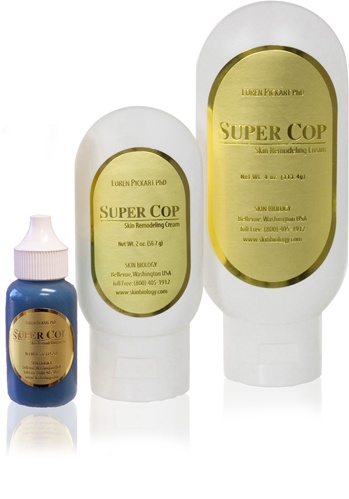
Product of the month - Super Cop Cream


        Super Cop Cream contains a powerful combination of second generation copper peptides (Skin Remodeling Copper Peptides - SRCPs) and natural moisturizers with antioxidants. When used together with Exfoliating Hydroxy Acids (EHAs), this product provides astonishing skin remodeling and rejuvenating effects.
     SRCPs have been scientifically proven to tighten loose skin, increase collagen and improve its structure, speed up skin remodeling and recharge the skin's own stem cells. They also ensure prompt removal of damaged structures as well as prevent age-related skin degradation due to their balancing effect on the skin's remodeling enzymes: matrix proteases.
     To achieve proper moisturization, the cream contains squalane (a natural lubricating and protective component of skin oil that diminishes with age), aloe barbadensis juice and gel (Aloe Vera gel) and amino acids leucine and glycine - both of which are important components of The Natural Moisturizing Factor (NMF).
     A protective blend of natural antioxidants added to Super Cop includes lycopene and lutein, mixed tocopherols and tocotrienols and coenzyme Q-10. Lycopene and lutein are two potent antioxidant compounds found in tomatoes and that posses anti-cancer and anti-wrinkle effects.
Mixed tocopherols, and tocotrienols belong to the vitamin E family and offer improved protection than that of Vitamin E (alpha-tocopherol) alone. Finally, coenzyme Q10 is an antioxidant found in mitochondria, the power stations of our cells. By protecting mitochondria from oxidative damage, coenzyme Q boosts our skin's energy level and slows down aging.
     Over the years, Super Cop has proven to be an excellent tool for combating age-related changes in the skin and achieving a beautiful, radiant complexion. To achieve the maximum benefit, this product can be used after EHA based serums such as: LacSal serum (10% lactic+salycilic acid), Exfol serum (2% salicylic) or Lactic Power 10 (10% lactic acid) .
Use salicylic acid products on oily and combination skin and lactic acid
products on dry and sensitive skin types.